About Me

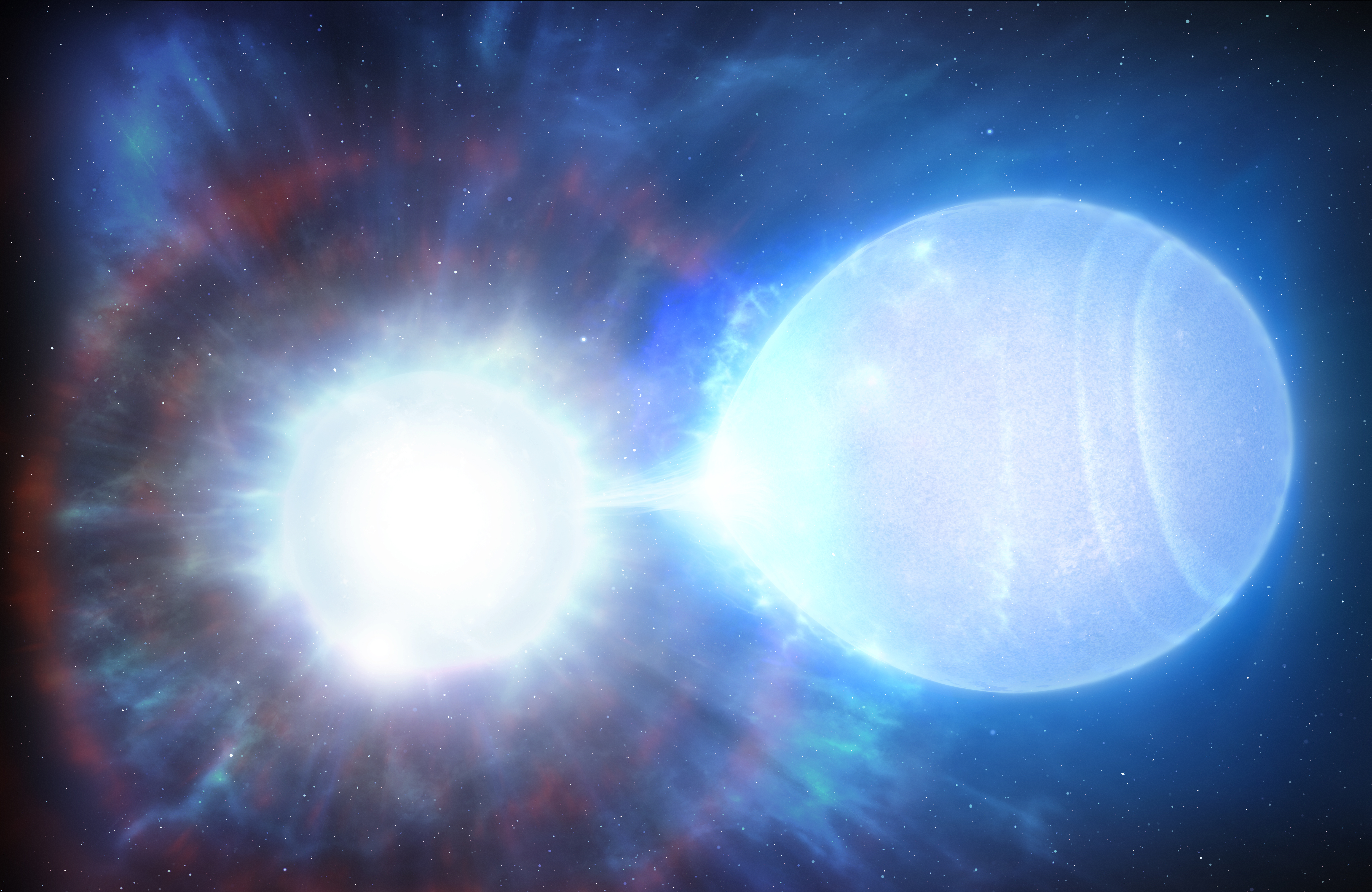
I am a Post-doctoral Research Associate (PDRA) in the Astrophysics group at the University of Potsdam. My research primarily focuses on double-white-dwarf binary stars. White dwarfs mark the endpoint of stellar evolution for intermediate-mass main-sequence stars, and will inevitably be the final stage of evolution for the Sun. However, the presence of a binary companion can majorly alter the evolution away from that of an isolated star. With two white dwarfs together as a binary, significant angular momentum can be lost from the system over time through the means of gravitational wave radiation, to the point where the stars spiral closer and closer together and hence radiate gravitational waves stronger.
I investigate systems exhibiting this effect using observational data to explore some of the final stages of stellar evolution close to the point of collision, where the orbital decay can be used to gain ultra-precise characterisation of system masses. Furthermore, for the most compact of systems, I strive to investigate the impact of mass transfer, tidal effects, and the potential presence of third bodies. My research has an immediate implication to understand type 1a supernovae, where I discovered the only double white dwarf binary that will explode as a type 1a supernova on a timescale similar to the age of the universe.
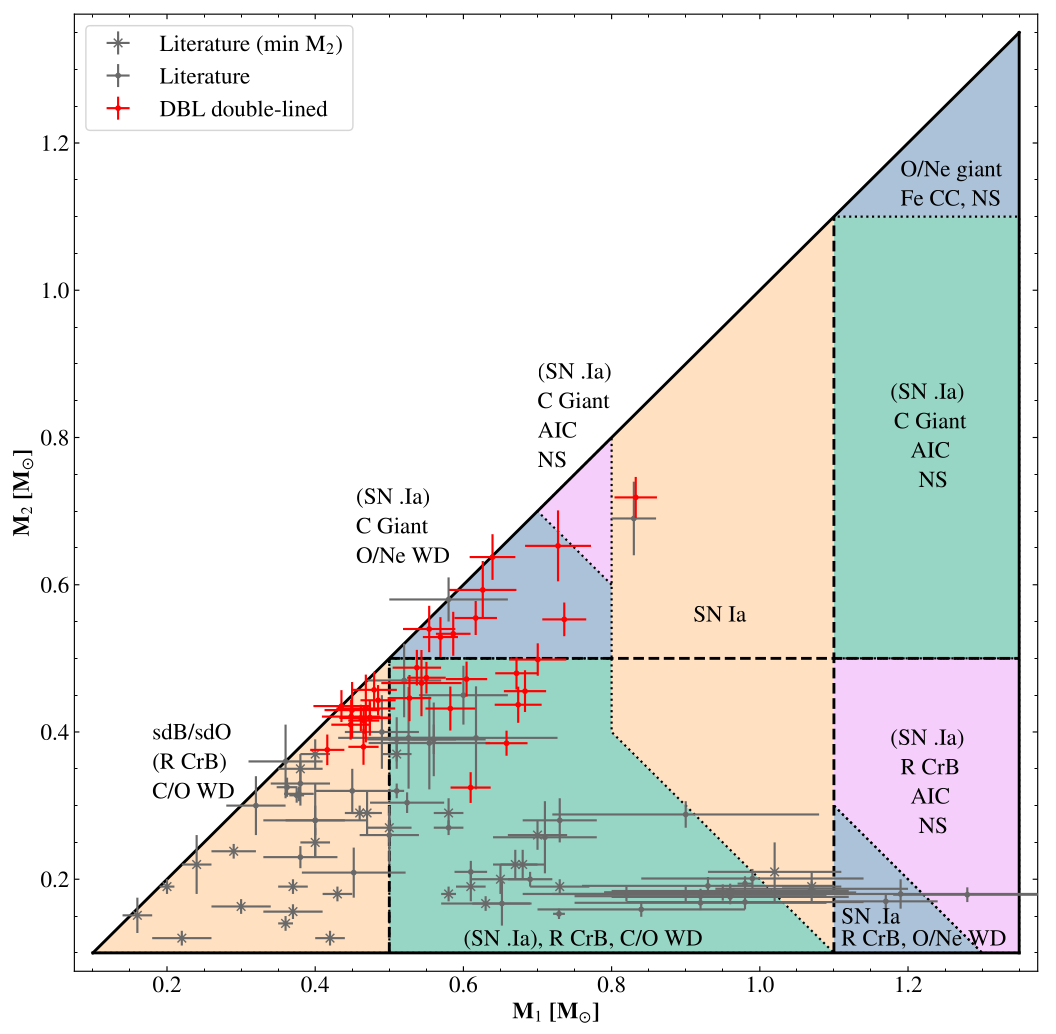
I also lead photometric and spectroscopic surveys, with a large effort around the DBL survey
Education:
PhD: University of Warwick
Master's: University of Surrey with year of research at the Instituto de Astrofísica de Canarias, La Palma
Research Interests:
Evolved stars, binary star systems, white dwarfs, gravitational waves, type Ia supernovae, machine learning, instrumentation and observing, planetary nebulae